The Marathi Future Is Already Written: A Speculative Boom American Readers Haven't Met
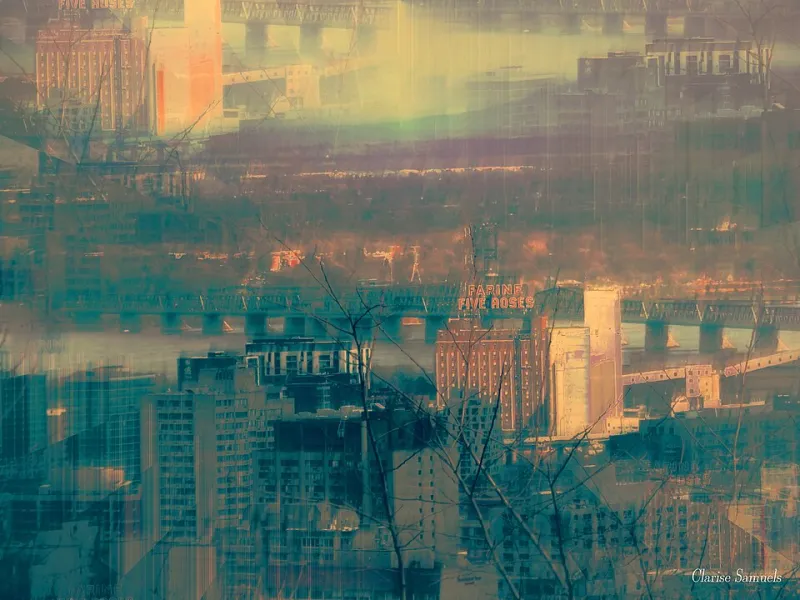
Photo: Clarise Samuels, CC BY-SA 3.0, via Wikimedia Commons
Ask an American reader to picture a Marathi novel and the image that arrives is almost always the same: a village, a courtyard, a family holding itself together against a changing century. It is a fine image, and it is responsible for some of the finest books to travel out of India. It is also about forty percent of the picture.
The other sixty percent includes space travel, haunted houses, engineered plagues, sentient machines, and cities that exist in a future Maharashtra no one has visited yet. Marathi speculative fiction is not a novelty or a recent flirtation. It is a tradition with a timeline, and it is currently in the middle of a boom that American readers have barely been allowed to see.
A Lineage Older Than the Label
The most persistent myth about non-English Indian genre writing is that it is derivative—that authors in Pune and Nashik discovered science fiction after reading Asimov in translation and began to imitate. The chronology does not support this.
Shripad Krishna Kolhatkar, writing in the late nineteenth century, folded speculative conceits into social satire with a freedom that would look experimental today. Jayant Narlikar, an astrophysicist by profession, spent the 1970s and 1980s writing Marathi novels and stories that used hard scientific premises without treating the science as the point; his work remains one of the clearest demonstrations that a regional language can carry rigorous speculative thinking. Bal Phondke extended that project in a more sociological direction, while Narayan Dharap built something close to a parallel popular tradition in horror and the supernatural—work that circulated widely, sold steadily, and is nearly invisible in English.
This matters because it establishes something American readers rarely get to see: a genre tradition developing on its own terms, with its own conventions, its own formulas, and its own arguments about what the future is for.
What the Current Wave Is Doing
Contemporary Marathi speculative writing is doing the thing that genre fiction does best when it is healthy: it is arguing with the present by relocating it. Writers active in the last decade have used near-future settings to interrogate water rights, agrarian debt, surveillance in small towns, and the strange intimacy of family life conducted across screens. There is a strong current of dystopian writing that is not interested in spectacle; the catastrophes in these stories are administrative, gradual, and entirely plausible.
Horror is thriving too, but in a register that differs from the American version. Where the US tradition often reaches for the cosmic or the explicitly monstrous, the Marathi strain tends to be domestic and social—the wrongness is in the house, the neighborhood, the inheritance. Readers who love the quieter end of Shirley Jackson or the social unease of contemporary horror cinema will recognize the register immediately.
Why American Readers Haven't Seen It
The reasons are structural rather than aesthetic. Genre writing travels through agents, and translation rights for genre fiction are usually sold through submission lists that regional-language publishers rarely join. Small presses with an interest in speculative work are often the same presses with no budget for translation. Review outlets that cover translated fiction tend to cover literary fiction, which means a Marathi science fiction novel in English would find itself reviewed by people who do not habitually review science fiction, and genre outlets rarely review work in translation.
The result is a gap that satisfies no one: the literary audience does not hear about the books, and the genre audience does not know they exist.
The Case for Crossover
Speculative fiction has one advantage over realism when it travels: worldbuilding is overt. A reader who has never been to Maharashtra does not need to have absorbed its social codes to follow a story about a city rationing water. The unfamiliarity is the invitation rather than the barrier.
There is also a practical matter of appetite. American genre readers are among the most voracious and most translation-friendly audiences in the country; the success of translated speculative fiction from Asia and Europe over the past decade demonstrates that readers will follow a good premise across a language barrier. What they need is access—editions, covers, and a bookstore that puts the book on the right shelf instead of the anthropology shelf.
What It Would Take
Three things, none of them exotic. First, sample translations and chapter-level excerpts published in genre magazines, which build readership before a full book exists. Second, packaging that tells the truth about what the book is—if it is a haunted-house novel, the cover should say so. Third, a critical vocabulary in English that treats Marathi speculative writing as a tradition rather than a curiosity.
None of this requires the literature to change. It requires only that the American side of the conversation catch up to a literature that has been writing the future for a hundred and thirty years, in a language that has never needed permission to imagine it.