What a Prize Would Prove: The Missing Trophy on Marathi Literature's American Shelf
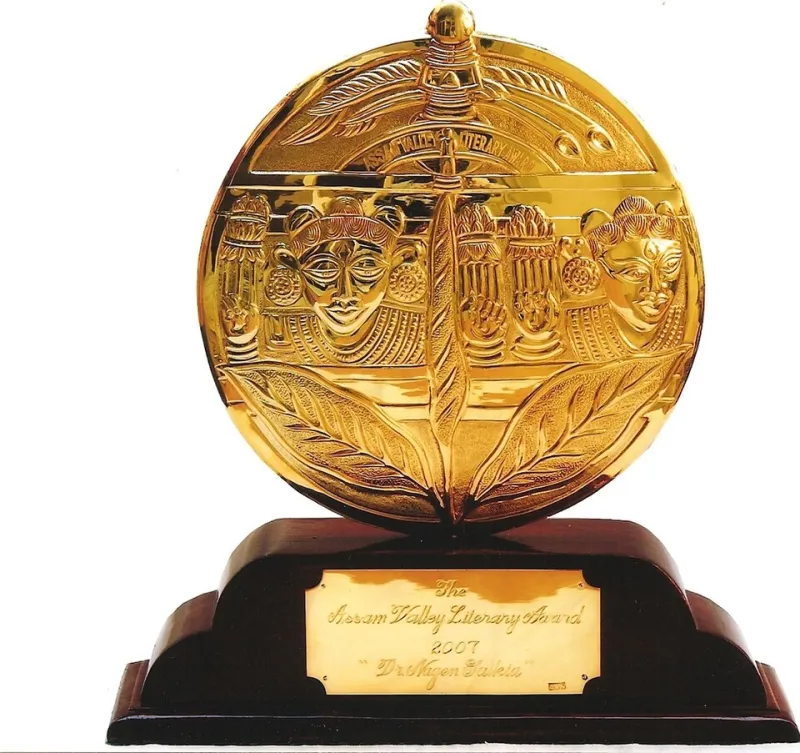
Photo: Sujit, Public domain, via Wikimedia Commons
For a Marathi novel to reach an American reader, it must clear three thresholds: translation, acquisition, and attention. The first two are expensive. The third is close to impossible without an intermediary, and in the United States the most efficient intermediary remains the literary prize.
That is the uncomfortable arithmetic behind a question that publishers, translators, and diaspora organizers have begun asking with more urgency this year: why is there no American award for Marathi literature in translation, and what would change if there were?
The Award as an Instrument of Attention
A prize does more than gild a cover. It hands a bookseller a sentence to say out loud, gives a librarian a defensible reason to order twelve copies instead of two, and provides a reviewer with a peg on which to hang a thousand words. When the National Book Award introduced a translated literature category in 2018, it did not merely honor five books a year; it created a recurring American news event around work that had previously been reviewed, if at all, in specialized journals.
The International Booker Prize and the PEN Translation Prize have done comparable work in their own registers. None of them, however, is designed to notice a language. They notice books, submitted by publishers, in whatever language happens to have produced that year's strongest submission list. A language without a publishing pipeline does not generate that list.
Where Marathi Actually Stands
It is worth stating plainly that Marathi is not a small literature. It has four centuries of print culture behind it, a theatre tradition that shaped the modern Indian stage, a film industry that has exported its own vocabulary of realism, a dense network of little magazines, and a prize ecosystem of its own—including Sahitya Akademi recognition and Jnanpith laureates such as V. S. Khandekar and Bhalchandra Nemade.
What Marathi lacks in the United States is not stature but infrastructure. There is no American prize that names it. There is no standing shortlist, no annual critical conversation, no predictable moment in the calendar when American editors are obliged to look.
Compare that with the languages that have traveled successfully. Scandinavian crime fiction did not arrive because American readers suddenly developed an interest in Nordic municipal life; it arrived because a handful of presses, a few prize lists, and a wave of review coverage created a category that booksellers could shelve. Korean fiction's American ascent followed a similar pattern of institutional repetition.
Why the Gap Persists
The mechanics are mundane. Translation is costly, and literary translation is subsidized unevenly. Small presses carry the burden and rarely have marketing budgets that stretch beyond a single season. Prize juries, meanwhile, can only judge what is submitted, and submissions follow publishers, and publishers follow readers. The circle is tight, and it is not broken by goodwill alone.
There is also a subtler problem: American readers are often introduced to Indian regional writing through a single frame—the village novel, the family saga, the partition narrative. A prize that honors only one register of Marathi writing would simply formalize that frame.
The Efforts Taking Shape
As of late 2026, the conversation has moved from complaint to design. Diaspora organizations and mandal networks that have spent two decades running literary sessions at their conventions are now discussing something more durable than a festival panel. University translation programs, several of which have added Marathi workshops in recent years, have begun to see a prize as a way to give student translators a professional horizon. Independent presses with one or two Marathi titles on their lists have the clearest incentive of all: a shortlist is cheaper than a marketing campaign and considerably more effective.
The proposals under discussion vary. One model would be an annual award for a book-length Marathi work published in English translation in the United States, with a shortlist of five and a jury that includes at least one translator and one bookseller. A second would pair the main prize with a separate award for an emerging translator, on the reasoning that the long-term bottleneck is people, not titles. A third would attach a reading tour to the winner—an unglamorous idea with an unusually high return, since author appearances remain the most reliable way to move copies of a translated book.
The Skeptic's Case, Taken Seriously
Prizes have costs. They can ghettoize, turning a living literature into an annual quota. They can concentrate authority in a small jury and reward the taste of the institutions that already hold sway. They can encourage publishers to chase awards rather than readers.
These objections deserve answers rather than dismissal. The strongest response is structural: rotating judges with genuine linguistic competence, transparency about submissions, a stated commitment to include poetry and speculative writing alongside the realistic novel, and a rule that keeps the prize from becoming the property of any single press or organization.
What a Prize Would Actually Prove
A trophy is not the point. The point is the sentence it makes possible. In a American bookstore, a sticker that reads "Winner, Marathi Literature Prize" does something no amount of earnest explanation can do: it asserts that this book belongs in the same conversation as everything else on the table.
That assertion is what Marathi literature in English has been missing. Not readers—there are readers, and they are finding these books one at a time, through book clubs and family recommendations and the occasional lucky shelf placement. What is missing is a public, repeatable signal that the literature is worth institutional attention.
Prizes do not create literature. They create the conditions in which literature is noticed. For Marathi, those conditions are not yet built. For the first time in years, there are people drawing the plans.