Hand-Selling the Mother Tongue: The American Indie Bookshops Treating Marathi as a Living Shelf
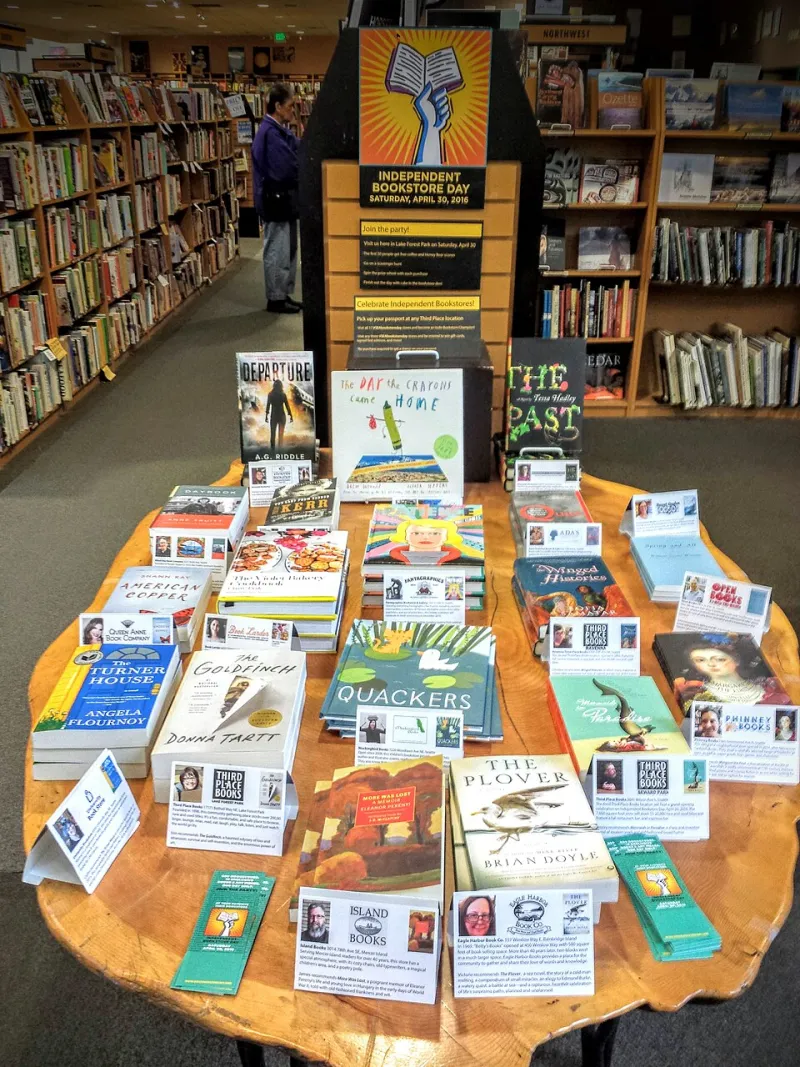
Photo: brewbooks from near Seattle, USA, CC BY-SA 2.0, via Wikimedia Commons
The shelf is a foot and a half wide, set at hip height near the front of the store, and it is doing work that no algorithm has managed: it is placing Marathi literature in the path of readers who were not looking for it. There are translations of Marathi novels, a poetry chapbook, a children's picture book, and a slim hardcover of essays. None of them are bestsellers. All of them move.
Stores like this exist in perhaps two dozen American cities, and their methods are remarkably consistent. They are not waiting for demand. They are manufacturing it, one hand-sold copy at a time.
The Stores That Carry the Weight
Independent bookshops with deep South Asian catalogs have long served diaspora readers, but the past several years have produced a subtler shift. Stores that once stocked Marathi titles as a service to a specific community are now stocking them as literature—shelved alongside translated fiction generally, faced out when possible, and included in staff recommendation cards written by booksellers who do not speak the language but have read the book.
Long-standing academic and specialty retailers, including South Asia Books in Columbia, Missouri, and Eastwind Books of Berkeley, have supplied American readers with regional-language titles for decades, often functioning as de facto distribution for university libraries. General-interest indies such as Moe's Books in Berkeley and Powell's in Portland carry translated Indian fiction where translators and publishers have made it available. In newer stores in New Jersey, the Chicago suburbs, and the Bay Area—many of them founded or staffed by second-generation booksellers—Marathi titles sit on the main floor rather than the world section.
The distinction matters more than it sounds. A world section is where books go to be admired. The main floor is where they go to be bought.
How Curation Actually Works
Ask an indie bookseller how a Marathi title ends up on the shelf and the answer is usually unromantic: someone asked. A customer requested a specific author. A temple or mandal group held an event nearby. A distributor's rep mentioned a translation. Booksellers describe a process that runs on relationships rather than data, because the data is thin—sales histories for translated Marathi fiction are so small that they are statistically invisible to national buyers.
That is precisely where independents have an advantage. A store owner can order two copies of a book that will never appear on a chain's radar, read it, and decide to hand-sell it. They can put it on a table with three other translated novels and a handwritten note. They can invite the translator to speak.
Special orders remain the quiet engine of all of this. Almost any bookstore in the country will order a Marathi title in print if a customer supplies the ISBN and the publisher, and the transaction takes about ninety seconds. What the customer does next—buying the second copy, bringing a friend, telling the bookseller it sold—is what determines whether the store orders it again.
Events as Cultural Infrastructure
Booksellers who stock Marathi literature consistently describe events as the most effective tool available. A reading by a translator draws a crowd that is half diaspora, half curious. A bilingual story hour for children fills a Saturday morning and sells board books. A book club that reads one translated Marathi novel a season builds a predictable base of buyers who otherwise would not have known where to begin.
Larger gatherings do the same work at scale. Regional Marathi conventions and mandal events have long included bookstalls, and those stalls function as pop-up bookstores—un glitzy, cash-based, and remarkably effective. Several independents now coordinate with organizers to take leftover stock back into the store and keep it on a dedicated display for the following months.
A Reader's Roadmap
For readers who want to participate rather than wait, the mechanics are straightforward.
- Ask for it by name. Give the bookseller the title, the translator, and the publisher. If the store cannot find it, ask them to try a second distributor before giving up.
- Use the library request form. Most American public library systems have a suggest-a-purchase page. Librarians read these. A handful of requests will move a title into the collection, where it reaches readers who will never enter a bookstore.
- Buy the edition that exists. Translated editions from small presses have small print runs. A pre-order before publication is worth more than three purchases afterward.
- Attend the events, even the small ones. A Tuesday-night reading with nine people in the audience still gives the bookseller a reason to keep the shelf.
- Tell them when it sells out. Booksellers rely on customers to report what is working. It is the least formal market research in the industry, and it is how a two-copy experiment becomes a standing order.
What the Chains Cannot See
Large retailers make decisions at a national level, using sales data that reflects what has already sold. That model cannot discover a literature with a small American footprint, because the footprint is the thing that has to be built first. Independents are not smarter about Marathi literature. They are simply closer to the reader who asks.
That proximity is the entire mechanism. A bookstore that stocks a Marathi novel is making an argument—that this language belongs on an American shelf, in front of American readers, on a normal Tuesday. The argument is won one conversation at a time, and it is being won.