The Grit Beneath the Garland: Why Marathi Crime Fiction Belongs on American Mystery Shelves
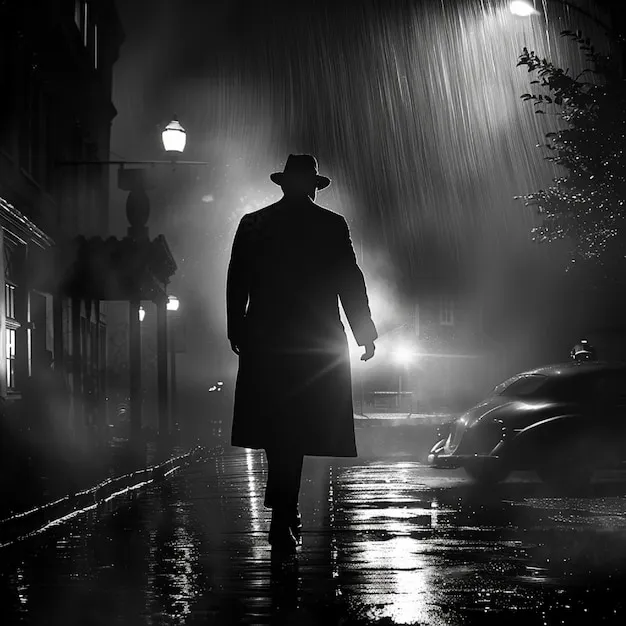
Photo: noir-style rainy night street in Pune India with detective silhouette and neon signs, via img.freepik.com
American mystery readers have spent the past two decades broadening their map. Scandinavian noir taught them to read cold landscapes and damaged investigators. Japanese crime fiction introduced them to procedural precision and social pressure. Italian mysteries made regional food, family, and corruption into a single atmosphere. The next opening may be in Marathi. The case is not that Marathi crime fiction is unknown at home. It is that the genre has been under-translated abroad, and that its particular blend of grit, humor, and moral complication fits a readership already trained to look beyond the drawing-room puzzle.
A Genre Hiding in Plain Sight
Marathi literature is often discussed through its poetry, its modernist novels, its drama, and its rich tradition of social realism. Crime fiction sits at the edge of that conversation, frequently dismissed as popular rather than literary. That dismissal is a mistake. The genre has produced enduring detectives, vivid city writing, and a steady readership that treats mystery fiction as a serious mirror of urban life. The Inspector Dhananjay novels of Suhas Shirvalkar, for example, helped establish a template for the dogged investigator operating inside a system that is neither fully corrupt nor fully trustworthy. Later writers have pushed the form toward psychological suspense, police procedure, and domestic crime.
What makes the Marathi tradition distinctive is not a single formula. It is the way the genre absorbs the texture of everyday life. A murder investigation may pass through a chawl, a college canteen, a newspaper office, and a family wedding. The detective may be brilliant, but the city is often the real engine of the plot. That is precisely the kind of crime fiction American readers have learned to value.
What Makes Marathi Crime Fiction Distinct
Three qualities stand out. The first is moral complication. Marathi crime fiction has a strong tradition of detectives who are not superheroes. They are tired, underpaid, politically exposed, or personally compromised. The question is not only who committed the crime but who allowed the conditions for it. This is noir in the proper sense: not simply darkness, but complicity.
The second is social observation. Caste, class, bureaucracy, family honor, and real estate pressure do not sit in the background as local color. They shape motive. A property dispute is not just a plot device. It is a map of power. A family secret is not just a twist. It is a comment on respectability. The best Marathi crime writing moves between the intimate and the institutional without losing pace.
The third is wit. Marathi literary culture has a sharp comic sensibility, and crime fiction often uses it as a survival mechanism. The humor is not a break from the darkness. It is how characters endure it. For American readers accustomed to bleak procedurals, this tonal range can be a revelation. It makes the books feel inhabited rather than engineered.
The Pune Effect
Pune deserves particular attention. The city has long been a literary and educational center, and its crime fiction reflects that character. There are old neighborhoods and new money, student neighborhoods and industrial corridors, a self-image of culture and a reality of uneven development. A detective novel set in Pune can move from a quiet bungalow to a crowded police station to a new apartment complex without leaving the same social world. Mumbai has its own formidable crime tradition, but Pune offers something different: a city that thinks of itself as genteel while producing very modern forms of pressure.
For American readers, this is an advantage. Mystery fiction thrives on specificity. A city that is not immediately recognizable can be more compelling than a generic metropolis. The reader does not need to know Pune to understand a landlord's threat, a family's anxiety about reputation, or a policeman's calculation about which case will advance his career. The local details do the work that good crime fiction always asks of them: they make the story irreversible.
The Translation Problem Is Not the Only Problem
The standard objection is that Marathi crime fiction is hard to translate. The dialogue is colloquial, the humor is idiomatic, and the social references are dense. All true. But translation is not the only barrier. The bigger problem is positioning. English-language publishers often treat Indian crime fiction as either literary fiction with a mystery element or as regional exoticism. Neither frame serves the genre well. These books should be published as crime fiction, with the pacing, series branding, and cover language that mystery readers expect.
A second barrier is availability. Readers cannot develop a taste for a genre they cannot find. A serious push would require more than one or two translated titles. It would require a series, a consistent translator or translation team, and a publisher willing to build a readership over several books. The Scandinavian model is instructive: it did not happen overnight. It happened through sustained curation.
What American Mystery Readers Would Recognize
American readers already accept morally compromised detectives, urban decay, political corruption, and family secrets. They accept procedurals that criticize the procedure. They accept noir that is funny. What they may not yet know is that Marathi crime fiction has been doing this work for decades, in a literary culture that often undervalues its popular forms.
The opportunity is not to sell Marathi crime fiction as a curiosity. It is to sell it as crime fiction. The covers should look like crime novels. The blurbs should promise pace and atmosphere. The introductions should be brief and confident, not apologetic. And the books should be allowed to be what they are: smart, entertaining, socially alert, and unafraid of the dark.
As of 2026, the American mystery market is crowded but curious. It has room for a new city, a new detective, and a new way of understanding how crime fiction can carry a society's contradictions. Marathi noir is not waiting to be discovered. It is waiting to be published properly.