From New Jersey to the Bay Area: A Season-by-Season Guide to North America's Marathi Literary Gatherings
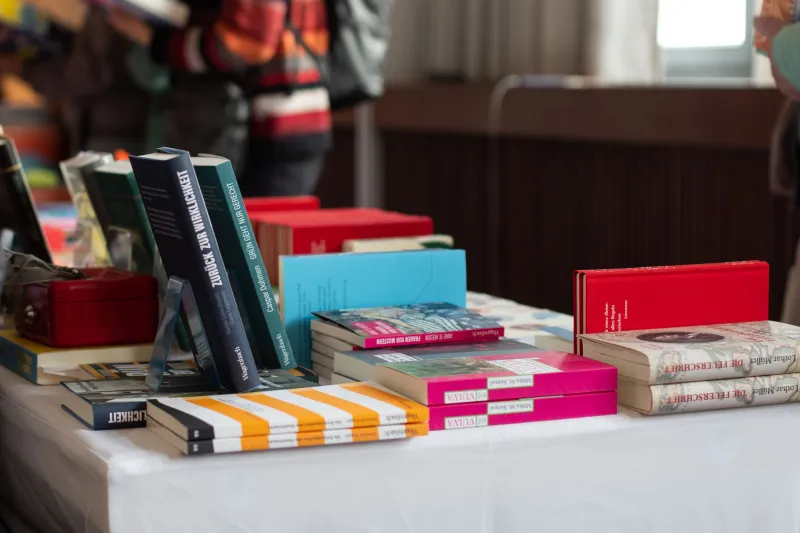
For decades, the American Marathi literary scene ran on intimacy rather than infrastructure: a poet's basement reading in Pittsburgh, a book-swap table at a Ganeshotsav in New Jersey, a novelist passing through town and staying an extra day to talk. That world has not disappeared, but it has grown a public face. Across the United States and Canada, Marathi literary festivals now draw crowds in the hundreds, host debut authors alongside household names from Maharashtra, and function — in the words of one longtime organizer — as "the living rooms of the community, with better chairs."
If you are a reader, a writer, or simply Marathi-curious, here are five gatherings that reward advance planning.
1. The Tri-State Sahitya Mahotsav — New Jersey
Held each spring in the New Jersey suburbs, this convention consciously models itself on the Akhil Bharatiya Marathi Sahitya Sammelan, complete with a seated president, an inaugural address, and the pageantry that tradition implies. What distinguishes it is its author pipeline: organizers maintain standing relationships with visiting writers from Pune and Mumbai, meaning attendees regularly see authors within a year or two of their American debut. Panels on translation and diaspora writing are its signature, and the book fair — stocked by both Indian importers and American small presses — is among the best on the East Coast.
Go for: the Sammelan ritual itself, and the strongest translation panels in the country.
2. Bay Area Marathi Kalamanch Literary Day — California
The Bay Area's gathering leans intellectual and bilingual, reflecting its audience: a large population of tech-era immigrants comfortable switching between Marathi and English mid-sentence. Expect experimental formats — a Marathi poetry slam judged by audience applause, a "manuscript clinic" where emerging writers get fifteen minutes with a published author, and an annual translation challenge in which teams render a contemporary Marathi short story into English on stage. Attendance skews younger than any other event on this list, and the questions in Q&A sessions are famously blunt.
Go for: energy, experimentation, and the best chance to meet second-generation writers.
3. Midwest Marathi Sahitya Sammelan — Chicago
Chicago's event, typically held in autumn, is the most family-integrated of the major gatherings. Children's Marathi reading competitions run parallel to adult sessions, and the result is a festival where three generations occupy the same hall — grandparents arguing about Khandekar while teenagers rehearse recitations in the hallway. Its literary programming is traditional but deep: recent editions have featured retrospectives on Ranjit Desai and sessions on the Vishnudas Bhamdal tradition of public songwriting.
Go for: the multigenerational atmosphere and children's programming that makes the literature feel inherited rather than assigned.
4. Toronto–Detroit Corridor Book Fair — Ontario/Michigan
Technically two events that share organizers and, some years, a traveling author roster, this cross-border fair has become the Great Lakes region's hub for Marathi books as objects: dealers, reprints, and the occasional rare volume changing hands. Collectors know it; so do librarians from American universities, who arrive with acquisition budgets. If you want to hold a conversation about Marathi publishing economics with someone who ships cartons for a living, this is the room.
Go for: the book market, and professional conversations about the publishing trade.
5. Dallas–Austin Marathi Literary Weekend — Texas
The newest entry on this list, the Texas weekend has grown fast by doing something deceptively simple: pairing literature with performance. Readings are staged with music; a recent adaptation of a Marathi short story ran as full theater; and film-screening-plus-discussion sessions connect the page to Marathi cinema's streaming era. For readers whose entry point was a screen rather than a page, it is the gentlest and most effective on-ramp.
Go for: adaptation culture, and the smoothest welcome for newcomers.
Planning Notes
Dates shift year to year — most of these gatherings anchor to spring or autumn weekends chosen around community calendars and school holidays, so verify dates through community associations each January. Registration is inexpensive; lodging fills quickly in the New Jersey and Bay Area editions. And one piece of advice repeated by every organizer interviewed: come with a book you loved and be ready to say why. In these living rooms, that introduction is the true price of admission — and the beginning of most friendships in the room.