Crossing the Linguistic Divide: What American Readers Lose When Marathi Literature Travels to English
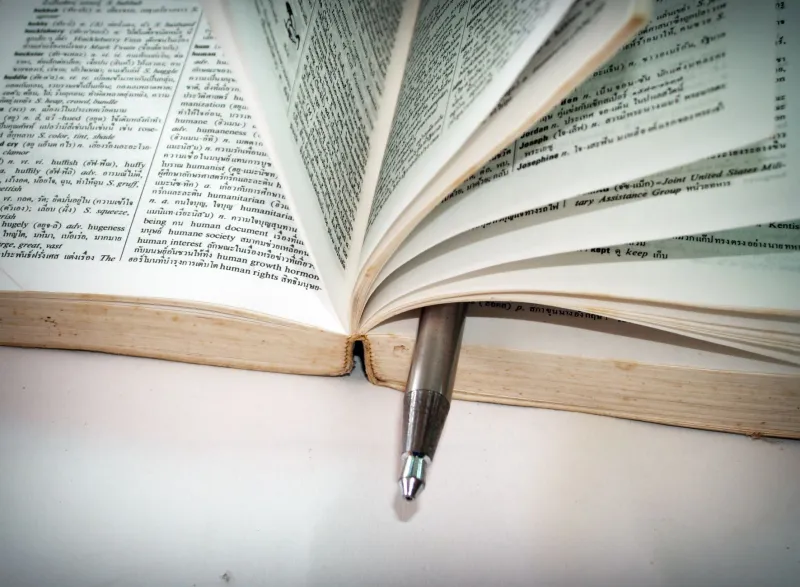
When a Marathi novel arrives in an American bookstore—or, more commonly these days, on an American e-reader—it arrives wearing new clothes. The sentences have been restructured. The idioms have been smoothed over. The untranslatable has been, by necessity, translated. And somewhere in that process, something essential has quietly slipped away.
This is not a criticism of translators. It is, rather, an honest reckoning with the fundamental paradox at the heart of literary translation: the more culturally specific and linguistically rich a source text, the more the target-language reader is, in some sense, reading a different book.
Marathi literature presents a particularly acute version of this challenge. As one of India's oldest literary traditions—spanning centuries of saint-poets, colonial-era novelists, and contemporary experimentalists—Marathi carries within it layers of cultural meaning that resist direct equivalence in English. Understanding what those layers are, and how translators navigate them, is essential for any American reader who wants to engage seriously with this tradition.
The Idiom Problem
Consider a simple example. The Marathi expression डोळ्यात तेल घालून बसणे—literally, "to sit with oil in one's eyes"—means to keep a very careful, vigilant watch over something or someone. A translator rendering this literally produces a bizarre image for an English-speaking reader. A translator who substitutes "to keep a hawk's eye" preserves the meaning but erases the cultural texture entirely.
Neither choice is wrong. But neither choice is complete.
Translators working between Marathi and English frequently describe this as a negotiation rather than a solution. "You are always choosing which loss you can live with," one translator noted during a literary panel discussion at a South Asian literary festival in New York. "Do you keep the strangeness and risk confusing the reader, or do you smooth it over and risk flattening the culture?"
This tension is not unique to Marathi, of course. But it is particularly pronounced in a language where idiomatic expression is so deeply woven into narrative prose. Authors like P. L. Deshpande, whose comedic sensibility depended heavily on wordplay and idiomatic surprise, present translators with near-impossible choices on almost every page.
Poetic Devices That Don't Survive the Crossing
Beyond idiom, there is the matter of prosody—the music of the language itself. Marathi has a long tradition of formal verse, including the devotional abhang form associated with saints like Tukaram and Dnyaneshwar. These compositions rely on specific metrical patterns, rhyme schemes, and the sonic qualities of Marathi phonology to produce their emotional effect.
When translated into English prose—as they often must be, since English does not share Marathi's prosodic conventions—the structural architecture of the original collapses. What was a tightly controlled formal meditation becomes, in English, a series of spiritually resonant but metrically free lines. The meaning survives. The form does not.
Some translators have experimented with finding analogous English forms—using the sonnet, or Whitmanesque free verse, or even syllabic constraints—to approximate the formal experience of the Marathi original. These are creative solutions, and they often produce beautiful English poems. But they are, inevitably, adaptations rather than translations.
Cultural References and the American Reader
A third category of loss involves cultural reference—the dense web of historical, religious, and social allusion that Marathi authors deploy with the confidence that their readers will recognize and respond to it.
A character described as behaving like a figure from a particular Marathi folk tradition, or a landscape evoked through reference to a specific regional festival, carries meaning for a Marathi reader that simply does not transfer to an American audience without extensive annotation. Translators must decide, repeatedly, whether to include explanatory footnotes (which interrupt narrative flow), integrate brief explanations into the text itself (which can feel awkward and condescending), or simply allow the reference to function as local color without full comprehension.
Each approach has its advocates. But each approach also changes the reading experience in ways that the author never intended.
What Survives—and What This Means for American Readers
None of this is to suggest that translated Marathi literature is without value for American readers. Quite the opposite. The emotional power of great Marathi fiction—the moral complexity of V. S. Khandekar's characters, the social acuity of Vishram Bedekar's narratives—does survive translation, and survives it remarkably well. The universal human concerns at the heart of this literature travel across languages with surprising fidelity.
But American readers engaging with translated Marathi works should understand that they are engaging with an approximation—a careful, skilled, often brilliant approximation, but an approximation nonetheless. The translator has made hundreds of decisions on their behalf, each one resolving a tension that the original text held in productive suspension.
For publishers and educators working to bring Marathi literature to American audiences, this has practical implications. Translator's notes, contextual introductions, and supplementary cultural materials are not optional extras. They are essential tools for helping readers understand not just what they are reading, but what they are not—and cannot be—reading in full.
The Case for Embracing Imperfection
Perhaps the most honest position is also the most generative one: to embrace the translated text as its own kind of literary object, related to but distinct from the original. This is not a consolation prize. It is a recognition that translation, at its best, is a form of creative interpretation that produces new cultural meanings.
The Marathi metaphor that gets lost in English may, in its very absence, prompt a curious reader to learn more—to seek out a bilingual edition, to study the language, to ask questions that the translated text alone cannot answer. In this sense, the gaps in translation are not failures. They are invitations.
For American readers standing at the threshold of Marathi literary culture, those invitations are worth accepting.