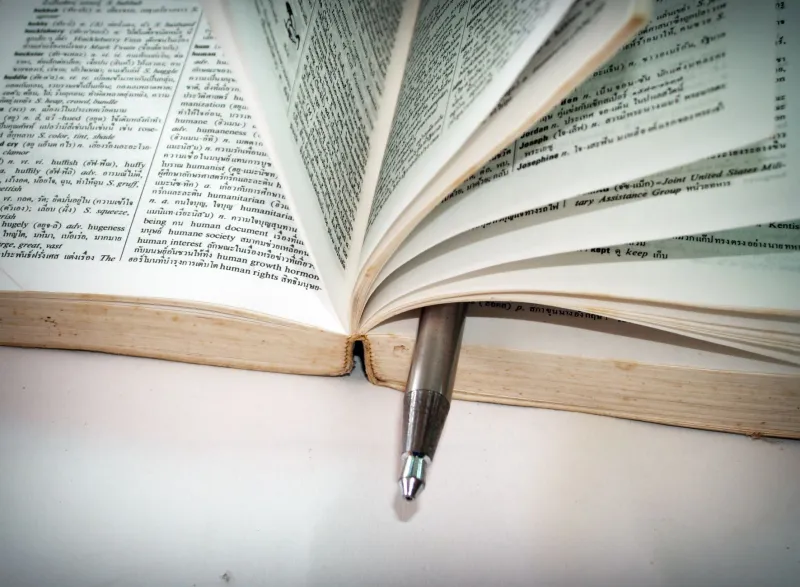
Between Two Tongues: The Art and Anguish of Translating Marathi Literature Into English
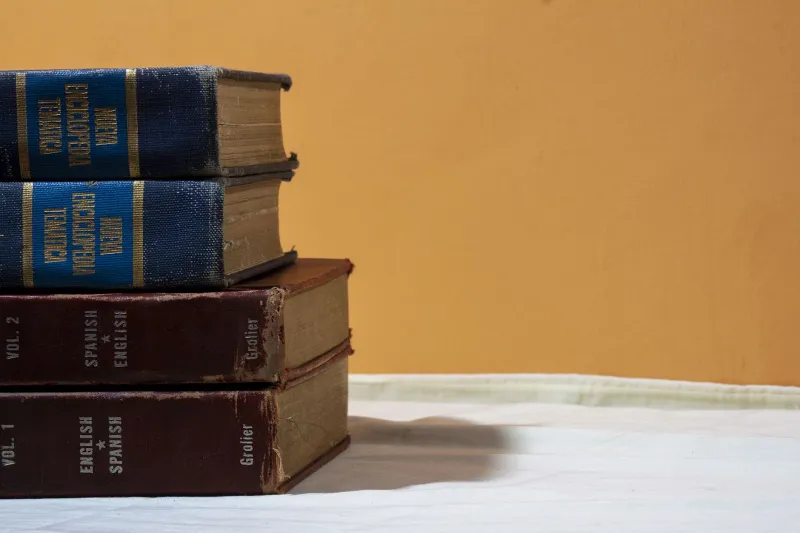
There is a word in Marathi—sovळेपणा—that translators consistently describe as one of the language's most resistant terms. It carries connotations of ritual purity, social propriety, and a kind of fastidious domestic order that is simultaneously physical, moral, and deeply caste-inflected. To translate it as "cleanliness" is technically defensible and culturally catastrophic. To leave it untranslated is to ask an American reader to pause mid-sentence and consult a glossary. To explain it in a footnote is to interrupt the literary experience with a lecture.
This is the translator's dilemma, rendered in a single word.
For those working to bring Marathi literature to English-speaking audiences—including the growing community of South Asian diaspora readers in the United States who encounter these texts through university courses, book clubs, and independent presses—such moments of untranslatability are not occasional inconveniences. They are structural features of the work, recurring with a regularity that demands not just linguistic skill but a coherent philosophy of translation.
The Technical Architecture of Loss
Marathi is a language with a literary history spanning more than seven centuries, and its expressive repertoire has been shaped by sources—Sanskrit grammatical tradition, Varkari devotional poetry, colonial-era prose reform, twentieth-century social realist fiction—that have no direct parallel in the English literary tradition. This depth creates specific categories of translation difficulty that practitioners discuss with a mixture of professional candor and evident frustration.
Humor, for instance, presents persistent challenges. Marathi comic writing frequently depends on the language's system of grammatical gender, on the musicality of specific regional dialects, and on culturally shared knowledge of particular social types—the pompous bureaucrat, the canny village elder, the educated young woman navigating patriarchal expectation—whose comedy is legible only within the cultural context that produced them. When that context is stripped away, the joke's mechanism is visible but its effect is absent.
Translator Shubhangi Marathe, whose English renderings of several Marathi short story collections have been published by American university presses, describes the problem with characteristic precision: "Comedy is the hardest thing to carry across. Tragedy translates more readily because grief is more universally legible. But the specific texture of Marathi humor—the particular way a character's status is deflated, the rhythm of a comic exchange in a specific dialect—these things depend on knowledge the reader does not have. You can explain the joke. But explaining a joke is not the same as telling one."
Wordplay and Its Discontents
Marathi poetry and literary prose make extensive use of forms of wordplay—श्लेष (shlesh), a figure of speech in which a single word carries multiple simultaneous meanings—that exploit the language's phonological and semantic structure in ways that have no reliable English equivalent. A line of verse by the nineteenth-century poet Keshavsut, for example, may turn on a word that simultaneously invokes a natural image, a spiritual concept, and a social critique. In English, a translator must choose one of these registers, sacrificing the others.
Some translators have experimented with compensatory strategies—introducing different kinds of wordplay in the English text, or restructuring lines to preserve the effect of multiplicity even when the specific mechanism cannot be replicated. These approaches have their advocates and their critics. Purists argue that compensatory invention distorts the original; pragmatists counter that a translation which fails to produce a comparable aesthetic experience has failed its primary purpose regardless of its fidelity to the source text.
"Translation is always an argument about what literature is for," observes literary critic Anjali Phadke, who has written extensively about Marathi-to-English translation in American academic journals. "If you believe literature is primarily a vehicle for information—plot, character, ideas—then a fairly literal translation can do the job. If you believe literature is primarily an experience—rhythm, texture, surprise—then you have to be willing to reinvent in order to preserve."
Cultural References and the Footnote Question
Perhaps no issue divides translators more sharply than the question of how to handle culturally specific references—to religious practices, historical events, regional geography, food, clothing, social ritual—that American readers cannot be assumed to recognize. The available options are well-known and each carries costs.
Glossaries and footnotes provide accurate information but interrupt the reading experience and risk making a literary work feel like an anthropological document. In-text explanations integrate the necessary context into the narrative but can produce awkward passages that no native speaker would ever have written. Cultural substitution—replacing a Marathi reference with an American equivalent—preserves readability at the expense of specificity and can distort the cultural meaning of the original in significant ways.
Translator Vikram Phansalkar, who recently completed an English version of a landmark Marathi novel for an American independent press, describes his approach as "principled inconsistency." "I use footnotes when the reference is central to meaning and cannot be paraphrased without distortion. I integrate brief explanations when the reference is incidental. I leave some things unexplained and trust the reader to sit with uncertainty. There is no system that works perfectly. You are always making judgment calls."
This judgment-call quality of translation work is, for many practitioners, both its intellectual appeal and its professional frustration. Every decision is defensible; none is beyond criticism.
The Imperfect Translation Debate
Underlying all of these specific challenges is a larger question that the Marathi literary community in the United States has begun to engage with increasing directness: Is an imperfect translation better than no translation at all?
The case for imperfect access is intuitive and, for many advocates, compelling. A translation that loses some of Marathi literature's humor, some of its wordplay, some of its cultural specificity nevertheless delivers something: narrative, character, historical perspective, emotional experience. For American readers who will never acquire Marathi fluency, an imperfect translation is the only available encounter with texts that would otherwise remain entirely inaccessible.
"I would rather have a reader in Ohio experience seventy percent of a Marathi novel than zero percent of it," says Marathe. "The alternative to imperfect translation is not perfect translation. The alternative is silence."
Critics of this position, however, argue that imperfect translations can create misunderstandings that are worse than ignorance—flattening the cultural complexity of Marathi literature into forms that confirm rather than challenge an American reader's existing assumptions about Indian culture and society.
This debate is not merely academic. As Marathi literature attracts growing attention from American readers, publishers, and university syllabi, the translations being produced now will shape the image of this literary tradition for a generation of readers who have no other access to it. The choices translators make—about sovळेपणा, about untranslatable humor, about which footnotes to write and which silences to leave—are, in aggregate, the choices that determine what Marathi literature means in America.
The responsibility is considerable. The compensation, most translators note with dry understatement, is not.