Syllabi and Stories: The Quiet Revolution Bringing Marathi Literature Into American University Classrooms
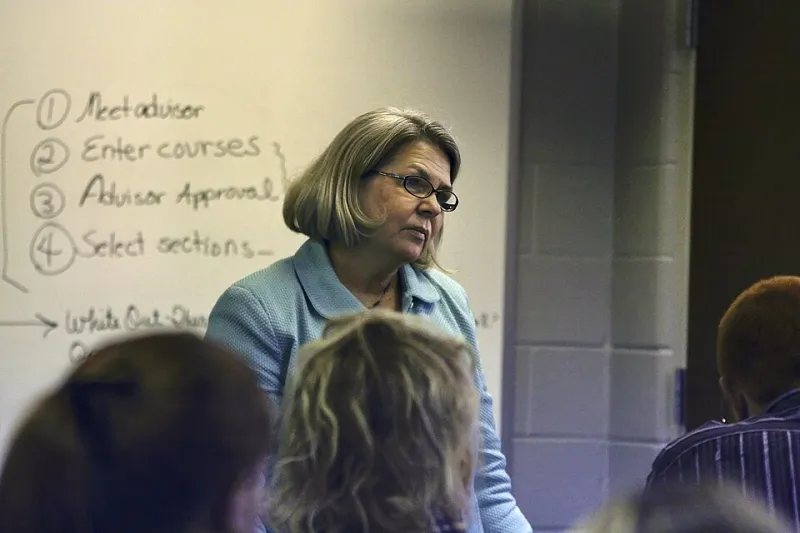
Photo: Harrison Keely, CC BY 4.0, via Wikimedia Commons
When Professor Meera Raghavan first proposed adding a unit on Marathi literature to her South Asian Studies survey course at a mid-sized university in Ohio, the response from her colleagues was not opposition — it was, she recalls, something more discouraging: indifference.
"The assumption was that regional Indian literatures were too specialized, too narrow for an introductory course," she says. "What I had to argue, and what I still argue, is that Marathi literature is not a footnote to Indian literary history. It is one of its central chapters."
That argument is gaining ground. Across American campuses — from large research universities in California and New York to small liberal arts colleges in the Midwest — Marathi literary works are beginning to appear on course syllabi in departments ranging from comparative literature and South Asian studies to postcolonial theory and world literature. The shift is modest in scale but significant in implication, and the educators driving it believe it marks a turning point in how American academia understands the breadth and depth of Indian literary culture.
A Canon Hiding in Plain Sight
Marathi literature is among the oldest continuously practiced literary traditions in the Indian subcontinent, with roots stretching back to the thirteenth-century devotional poetry of Sant Dnyaneshwar and Sant Tukaram. Its modern period produced writers of international stature — figures such as Vishnu Sakharam Khandekar, whose novel Yayati stands as one of the great mythological reinterpretations in any South Asian language, and Vijay Tendulkar, whose plays have been compared in scope and moral seriousness to the work of Arthur Miller.
Yet for decades, this tradition remained largely invisible in American academic curricula. The reasons are structural as much as cultural. English-language publishing and translation networks have historically favored Hindi and Bengali works, leaving Marathi literature without the institutional infrastructure needed to reach Western scholarly audiences.
"The texts existed. The translations, in many cases, existed," says Dr. James Whitmore, a librarian specializing in South Asian collections at a major research university in the Northeast. "What was missing was the advocacy — someone to say, these books belong on your reading list."
Professors as Champions
The professors who are now introducing Marathi literature into their courses describe a process that is as much curatorial as pedagogical. Building a Marathi literary unit requires identifying reliable translations, locating secondary scholarship, and making the case to colleagues and department chairs that the material merits inclusion in an already crowded syllabus.
Professor Anita Bhosale, who teaches postcolonial literature at a liberal arts college in New England, began incorporating Marathi texts into her courses three years ago, starting with a selection of short stories by Mahasweta Devi alongside the work of Marathi women writers from the twentieth century. The juxtaposition, she found, enriched her students' understanding of how regional literary traditions across South Asia engaged with questions of caste, gender, and political resistance.
"My students arrive with a very limited map of Indian literature," Bhosale explains. "They know Arundhati Roy. They may know Salman Rushdie. When they encounter Marathi writing — when they read the social realism of Narayan Surve or the feminist narratives of Gauri Deshpande — they realize how much of the map they had never seen."
This expansion of literary geography, educators argue, is precisely what a rigorous world literature curriculum should accomplish. Marathi texts do not merely add geographic diversity to a syllabus; they introduce students to entirely different aesthetic traditions, narrative forms, and philosophical preoccupations.
Libraries Leading the Way
Beyond the classroom, academic libraries are playing a critical role in making Marathi literature accessible to American scholars and students. Several major university libraries have in recent years expanded their South Asian collections to include a more representative selection of Marathi titles, both in the original language and in translation.
Dr. Whitmore describes a deliberate acquisition strategy at his institution, one informed by conversations with faculty, graduate students, and members of the local Marathi-speaking community. "We began by identifying the gaps," he says. "Classic Marathi novels that had been translated but never acquired. Contemporary poetry collections. Critical anthologies. Once you start looking, you realize how much material is available and how little of it had made it onto American shelves."
Digital access has accelerated this process considerably. Partnerships between American universities and Indian publishers, including regional Marathi presses, have made it possible for students at institutions across the country to access Marathi texts that would previously have required a research trip to a specialized collection.
The Impact on Authors and Publishers
The growing presence of Marathi literature in American academic settings has tangible consequences for the authors and publishers who produce it. Inclusion on a university syllabus confers a form of institutional legitimacy that can open doors to translation deals, international literary festivals, and a new category of reader: the educated American student encountering Marathi writing for the first time as part of a formal course of study.
For debut authors and smaller Marathi presses, this pathway to academic audiences represents a meaningful shift in the landscape of literary opportunity. Publishers such as Marathi Book Publisher are increasingly attentive to the role that American academic recognition can play in elevating the profile of Marathi literature beyond its traditional readership.
"When a professor at a university in Michigan assigns your book," observes one Pune-based editor who has worked with several authors whose work has reached American classrooms, "it changes the conversation about what that book is and who it is for."
Curriculum Designers and the Long View
For curriculum designers working at the intersection of higher education and cultural advocacy, the inclusion of Marathi literature in American university courses represents a long-term investment in how the next generation of scholars, educators, and cultural professionals understands South Asian civilization.
"We are not just adding a text to a syllabus," says one curriculum consultant who has worked with several universities to develop South Asian literature modules. "We are making an argument about what counts as world literature. And that argument has consequences that extend well beyond any single course."
Professor Raghavan, whose early advocacy in Ohio once met with polite skepticism, has since seen her Marathi literature unit become one of the most discussed components of her survey course. Her students, she reports, are frequently surprised — and then captivated.
"They come in thinking they know what Indian literature looks like," she says. "By the end of the unit, they understand that what they knew was a very small part of a very large story. That is exactly what education is supposed to do."