Speaking Aaji's Language: How American-Born Marathi Youth Are Reclaiming Their Linguistic Roots
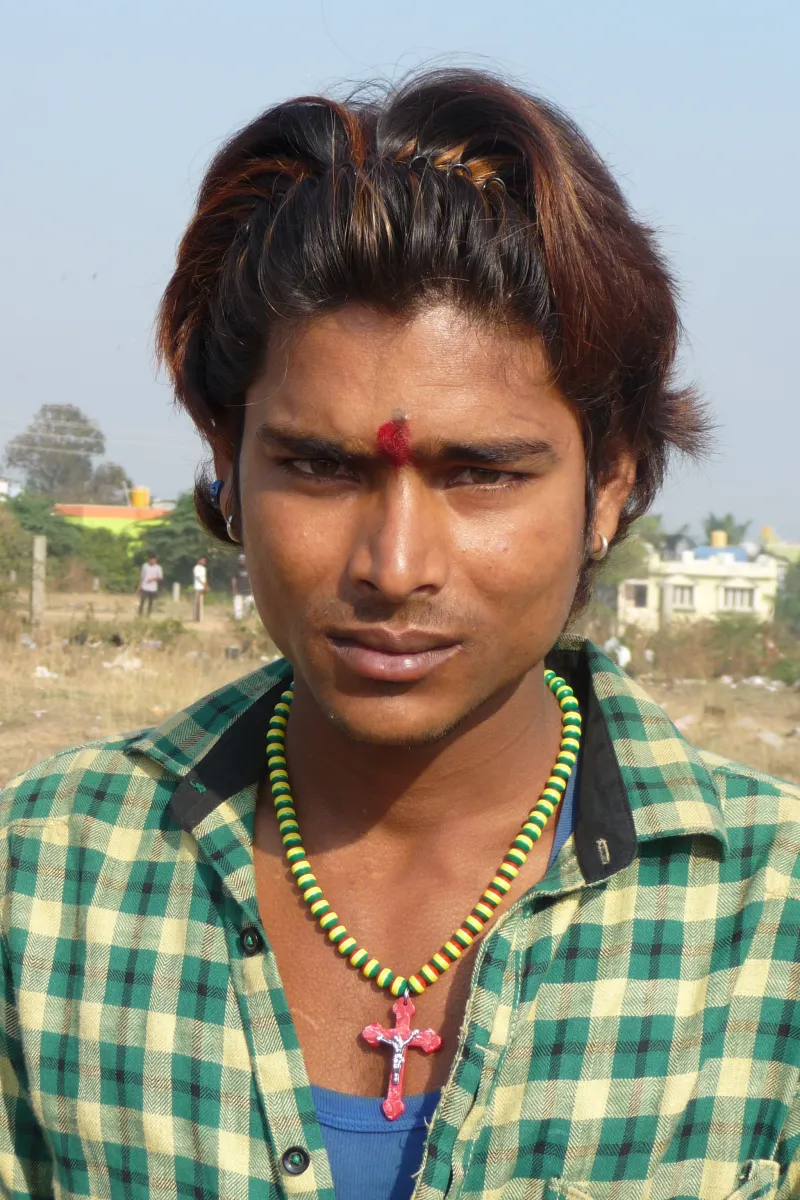
Photo: Indian American grandmother teaching grandchild language at home, via get.pxhere.com
In a sunlit living room in Fremont, California, eight-year-old Anaya Kulkarni sits beside her grandmother — her aaji — and carefully repeats a line from a Marathi nursery rhyme. Her pronunciation is imperfect, her grammar still forming, but the warmth in her grandmother's eyes is unmistakable. For Anaya's parents, who immigrated from Pune nearly two decades ago, this small moment represents something far larger: a deliberate, conscious effort to ensure that their daughter grows up knowing who she is and where she comes from.
This scene is no longer uncommon in Marathi-American communities scattered across cities like Chicago, New Jersey, Houston, and the San Francisco Bay Area. A quiet but meaningful movement is underway — one in which families are choosing to teach Marathi to their American-born children, not out of obligation, but out of genuine cultural conviction.
The Emotional Architecture of a Mother Tongue
Language is rarely just language. For first-generation immigrants, Marathi carries the weight of memory — the sound of a parent's voice, the rhythm of a festival prayer, the particular cadence of a grandmother's story told on a monsoon evening. When that language is absent from a child's life, something intangible but essential is lost.
"I realized that my daughter could speak to me in English perfectly, but she couldn't speak to my mother at all," says Priya Deshpande, a software engineer based in the Chicago suburbs. "That gap felt like more than a communication problem. It felt like a severing."
This emotional motivation is one of the most frequently cited reasons Marathi-American parents give for actively pursuing language instruction. Unlike the assimilationist pressures that shaped earlier immigrant generations — who often deliberately withheld their native tongues to ease their children's integration — today's parents are operating from a different cultural calculus. They want their children to be fluently American and authentically Marathi.
Digital Platforms and the New Classroom
One of the most significant developments enabling this revival is the proliferation of digital learning tools tailored to heritage language speakers. Platforms such as Marathi-specific YouTube channels, language learning apps, and structured online courses have made the language far more accessible than it was even a decade ago.
Organizations like the Marathi Vishwa foundation and various local Marathi Mandals across the US have expanded their programming to include structured weekend language schools for children. These sessions go beyond grammar drills — they incorporate storytelling, folk songs, and cultural activities that situate the language within a living cultural context.
"We don't just teach vocabulary," explains Suresh Joshi, a volunteer educator who runs a Marathi language class for children in New Jersey. "We teach why the language matters. We read stories, we discuss festivals, we connect the words to a world that still exists and is still vibrant."
For older teenagers and young adults, social media communities have created unexpected spaces of linguistic solidarity. Private Facebook groups, Instagram accounts dedicated to Marathi poetry and literature, and Discord servers where diaspora youth exchange phrases and cultural references have all contributed to a grassroots normalization of Marathi among the younger generation.
Literature as a Bridge
It is here that the role of Marathi literature becomes particularly significant. For many families, books have served as the most enduring and emotionally resonant vehicles for language transmission. Reading a story by Pu La Deshpande aloud, or sharing a poem by Mangesh Padgaonkar before bedtime, creates an intimate linguistic bond that no app or classroom can fully replicate.
Publishing platforms and literary organizations dedicated to Marathi writing have increasingly recognized the diaspora as both an audience and a constituency. Bilingual editions of classic Marathi texts, audio recordings of celebrated authors reading their own work, and curated reading lists designed specifically for heritage learners have all gained traction in recent years.
"When a child reads Marathi literature — even simplified versions — they absorb not just the language but the worldview embedded in it," notes educator and author Meera Gokhale, who has developed Marathi reading materials for diaspora children. "That worldview is irreplaceable. It is the philosophical and cultural DNA of an entire civilization."
The Broader Stakes: Minority Languages in Multicultural America
The Marathi mother tongue movement does not exist in isolation. It is part of a broader national conversation about the survival of minority and heritage languages in an English-dominant society. According to the American Community Survey, language shift — the process by which immigrant families transition entirely to English within two or three generations — remains the norm across most linguistic communities in the United States.
Yet researchers who study bilingualism increasingly argue that maintaining a heritage language offers concrete cognitive, social, and psychological benefits. Children who grow up bilingual demonstrate enhanced executive function, greater cultural adaptability, and stronger family cohesion. For Marathi-American families, these findings reinforce what many parents already know intuitively: that teaching their children Marathi is not a burden but a gift.
The challenge, of course, is sustainability. Weekend language schools depend on volunteer labor and community funding. Digital tools require parental guidance and consistent reinforcement at home. And as second-generation youth enter adolescence, the social pressures of American peer culture can make heritage language practice feel like an imposition rather than an identity.
"It gets harder as they get older," admits Rahul Marathe, a father of two teenagers in Houston. "But we keep at it. We make it part of who we are as a family — the food, the music, the books. The language is woven into all of it."
A Living Language Across Generations
What is perhaps most striking about this movement is the agency being exercised by the young learners themselves. Increasingly, second-generation Marathi-Americans are not passive recipients of their parents' cultural aspirations — they are active participants in their own linguistic recovery.
Anaya Kulkarni, the eight-year-old from Fremont, recently asked her mother to order a Marathi picture book she had seen on an online reading list. She wanted, she said, to read it to her aaji the next time they spoke on video call.
In that small, sincere request lies the entire promise of this movement: not the preservation of a language in amber, but its continuation as a living, breathing, beloved part of daily life — carried forward by children who understand, even at eight years old, that some things are worth the effort of learning.
For a community defined by its stories, its poetry, and its profound literary tradition, ensuring that the next generation can read those stories in the language in which they were written may be the most important cultural work of our time.