Your Book, Your Terms: A Practical Roadmap for Marathi Authors Ready to Self-Publish in America
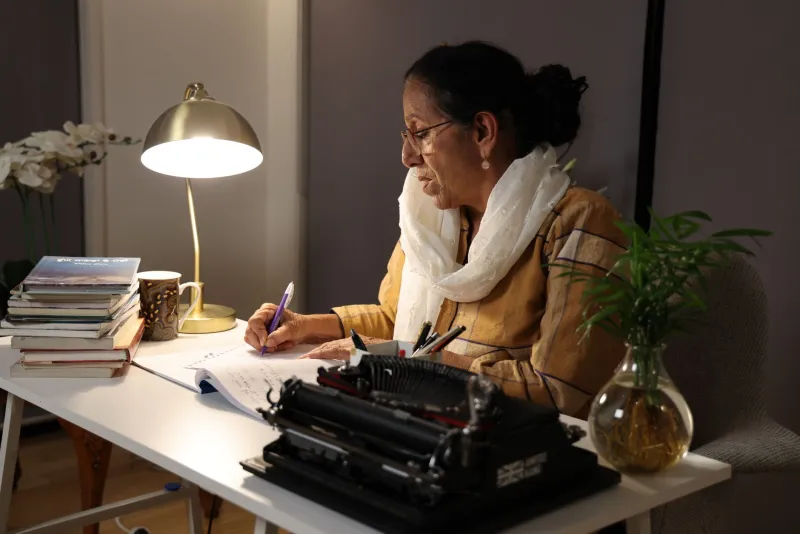
The traditional publishing journey for a Marathi author based in the United States can feel like a series of doors that open only slightly before closing again. American publishers rarely have Marathi-language lists. Indian publishers with established Marathi catalogs have limited distribution networks in the United States. Literary agents who specialize in South Asian literature tend to focus on English-language manuscripts. The result, for many talented Marathi writers in the diaspora, is a manuscript that sits on a hard drive, waiting for a path that may never materialize.
Self-publishing has changed this equation significantly. The tools available to independent authors today — print-on-demand platforms, digital distribution networks, social media marketing infrastructure — have lowered the barriers to publication in ways that were unimaginable a decade ago. Marathi authors in the United States are using these tools with increasing sophistication, building readerships and generating revenue without seeking permission from institutions that were never designed with them in mind.
This guide is intended as a practical resource for Marathi writers who are seriously considering the independent publishing route. It covers the essential mechanics, addresses the specific challenges that non-English titles face on major platforms, and draws on the experiences of authors who have already navigated this terrain.
Starting With the Manuscript: Formatting for Non-English Text
The first practical challenge for Marathi self-publishers is one that English-language authors rarely confront: the Devanagari script requires specific handling that many standard publishing software packages do not accommodate elegantly.
For print books, Microsoft Word can handle Devanagari text reasonably well if the correct Unicode fonts are installed and text direction is properly configured. However, for professional-quality typesetting, many experienced Marathi self-publishers recommend working with dedicated desktop publishing software such as Adobe InDesign, which offers superior control over Devanagari typography, line spacing, and justification. The additional learning curve is significant but worthwhile — poorly typeset Devanagari text is immediately apparent to readers and undermines the perceived quality of an otherwise strong book.
For e-books, the situation is more complex. EPUB files that contain Devanagari text must be carefully validated to ensure that the script renders correctly across different e-reader devices and applications. Some authors have reported that Devanagari text displays correctly on Kindle applications for iOS and Android but imperfectly on certain physical Kindle devices. Testing across multiple platforms before publication is essential. Tools such as Calibre, a free e-book management application, can assist with format conversion and basic validation.
ISBN Navigation: What You Need and Where to Get It
Every book sold through mainstream retail channels requires an International Standard Book Number. In the United States, ISBNs are administered exclusively through Bowker, the official ISBN agency, at myidentifiers.com. A single ISBN costs approximately $125 as of this writing; purchasing a block of ten ISBNs at approximately $295 represents significantly better value for authors who plan to publish multiple titles or different formats of the same work.
It is important to understand that each distinct format of a book — print, EPUB, MOBI — technically requires its own ISBN. Authors planning to release a Marathi title in both print and digital formats should budget accordingly.
Amazon's Kindle Direct Publishing platform offers free ISBNs for books distributed exclusively through Amazon. However, these ISBNs list Amazon as the publisher of record, which some authors prefer to avoid. Authors who wish to appear as their own publisher — or to use a self-created imprint name — should purchase ISBNs through Bowker and assign their chosen imprint as the publisher.
Amazon KDP for Non-English Titles: Opportunities and Limitations
Amazon KDP is the dominant self-publishing platform in the United States and represents the most direct route to readers for most independent authors. However, Marathi-language titles require some additional navigation.
KDP does support non-English language publishing, including titles in Devanagari script. When setting up a new title, authors should select the appropriate language from the platform's language dropdown menu. Marathi is listed as a supported language, though the platform's metadata and categorization infrastructure was built primarily with English titles in mind, and some aspects of the publishing process may require workarounds.
One practical limitation: KDP's automated keyword and category systems are less effective for non-English titles, which means that discoverability within Amazon's search algorithm can be significantly lower for Marathi books than for English-language titles in comparable genres. Authors should compensate by being highly specific in their keyword selections, using both transliterated Marathi terms and English descriptive phrases that potential readers might realistically search.
IngramSpark, an alternative print-on-demand and distribution platform, offers broader retail distribution than KDP alone — including distribution to independent bookstores and library networks — and is worth considering for authors who want their Marathi titles available through channels beyond Amazon.
Building a Reader Community Before and After Publication
Distribution infrastructure matters less than it once did if an author has built a direct relationship with their readers. For Marathi self-publishers in the United States, community building is arguably the most important investment they can make, and it should begin well before a manuscript is ready for publication.
Several Marathi authors who have successfully self-published in the United States have built their reader communities through a combination of WhatsApp groups, Instagram accounts focused on Marathi literature and culture, and YouTube channels featuring readings, author conversations, and discussions of Marathi books. These platforms allow authors to cultivate genuine relationships with readers who are actively seeking Marathi content and who become reliable early purchasers and word-of-mouth advocates when a new title appears.
Email lists remain underutilized by many Marathi self-publishers but represent one of the most reliable reader communication tools available. An author with a list of even five hundred engaged readers who have explicitly opted in to receive updates has a meaningful launch audience that no algorithm can take away.
Case Studies: What Success Looks Like
Several Marathi authors based in the United States have demonstrated that independent publishing can generate both readership and revenue without traditional gatekeepers.
One author of Marathi short fiction based in the Chicago metropolitan area self-published a collection through KDP that has sold steadily to diaspora readers across North America for over two years. The author reports that direct community marketing through Marathi cultural organizations and diaspora Facebook groups drove the majority of early sales, with Amazon's algorithm subsequently contributing to organic discovery.
Another author, based in New Jersey, published a Marathi-language memoir about the immigration experience that found its primary audience not through Amazon but through direct sales at Marathi cultural events and via a personal website. The author has since expanded distribution to IngramSpark to reach library buyers.
What these cases share is not a single formula but a common orientation: patience, community investment, and a willingness to treat publication as the beginning of a reader relationship rather than its culmination.
The Larger Argument
Self-publishing a Marathi book in America is not a consolation prize for authors who could not find a traditional publisher. It is a genuinely viable path to reaching readers, maintaining creative control, and contributing to a literary culture that institutional gatekeepers have not historically served well. The tools exist. The audience exists. What has sometimes been missing is a clear map of the terrain. Consider this a beginning.