Ink Beneath the Dust: How Archival Hunters Are Bringing Marathi Literature's Lost Voices Back to Life
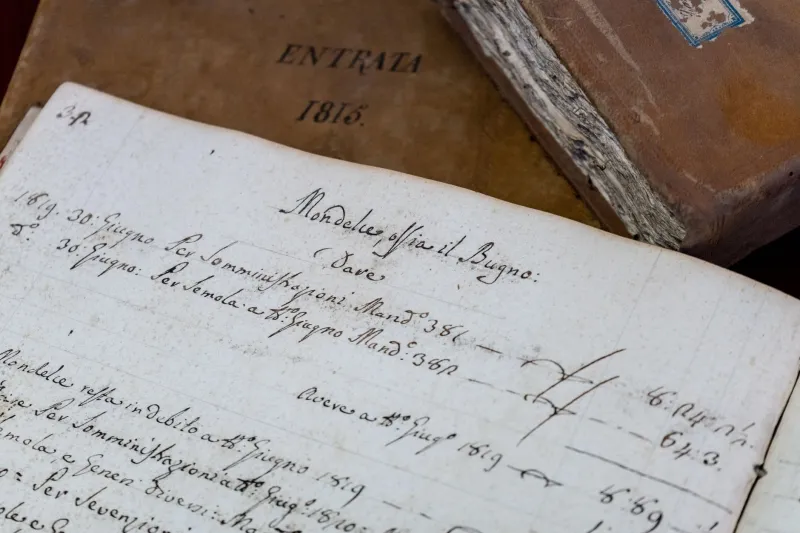
There is a particular kind of silence that settles over an unpublished manuscript. It is not the silence of absence but of waiting—of words composed with care and intention, then set aside by circumstance, obscured by time, or simply overlooked by a literary establishment that did not yet know what it was holding. Across Maharashtra and within the diaspora communities of the United States, that silence is finally being broken.
Marathi publishers, academic researchers, and cultural organizations are engaged in a sustained effort to excavate the literary past—combing through archival holdings, digitizing fragile folios, and translating works that have never before reached an English-language readership. What they are finding is remarkable: a stratum of Marathi literary history far richer, more diverse, and more complex than the established canon has suggested.
The Archives Speak
The work begins, as it so often does, in rooms that smell of old paper. The Pune-based Bhandarkar Oriental Research Institute, one of South Asia's most respected repositories of classical manuscripts, holds thousands of documents in Sanskrit, Prakrit, and Marathi—many of them catalogued but never fully studied. Similar collections exist at the University of Mumbai, at regional district libraries across Maharashtra, and within the private holdings of families whose ancestors were poets, social reformers, and scholars.
For literary researchers, these spaces represent something close to a frontier. "We are not merely filling gaps in a bibliography," explains one scholar affiliated with a Marathi studies program at an American university. "We are discovering that the gaps themselves were telling a story—about whose voices were elevated and whose were quietly set aside."
Among the most significant categories of recovered material are works by women writers of the nineteenth and early twentieth centuries, authors whose contributions were acknowledged in their own lifetimes but never formally published, and texts associated with the Bhakti movement that survived only in handwritten copies passed between religious communities. Each category opens a distinct window onto Marathi society, belief, and creative expression.
Digitization as a Form of Preservation
The physical fragility of these materials presents a formidable challenge. Paper deteriorates. Ink fades. Binding structures collapse. A manuscript that survives one generation may not survive the next without deliberate intervention. This reality has accelerated investment in digitization projects, which serve the dual purpose of preservation and accessibility.
Several Marathi publishers have partnered with technology organizations and academic institutions to create high-resolution digital archives. These efforts, modest in scale by the standards of major national library systems, are nevertheless producing meaningful results. Scholars in Chicago, New York, and Los Angeles can now access scanned folios of texts that, a decade ago, required transatlantic travel and institutional permission simply to examine.
For the Indian-American community in the United States—a readership that Marathi Book Publisher has long sought to serve—digital accessibility carries particular resonance. Many members of this community maintain deep emotional ties to Marathi language and culture while living far from Maharashtra's physical archives. The ability to encounter a recovered poem or a previously unknown short story through a digital platform represents more than scholarly convenience; it is a form of cultural continuity.
What the Recovered Texts Reveal
The literary content of these rediscovered works is as significant as their material existence. Scholars who have examined recently surfaced manuscripts report several recurring and illuminating patterns.
First, the range of genre is wider than the received canon implies. Alongside poetry—historically the prestige form in Marathi letters—researchers are finding prose sketches, satirical essays, epistolary narratives, and early experiments in what might today be called short fiction. This diversity suggests that Marathi literary culture was engaged in formal experimentation well before the twentieth century, even if that experimentation was not always recognized or preserved by contemporary institutions.
Second, the recovered texts frequently complicate established narratives about literary influence and periodization. A manuscript attributed to a lesser-known author of the colonial period may reveal thematic concerns and stylistic strategies that scholars had previously associated with a later generation—raising productive questions about who learned from whom, and which influences were acknowledged versus suppressed.
Third, and perhaps most compellingly for contemporary readers, many of these texts address subjects that feel urgently relevant: caste discrimination, women's education, religious pluralism, and the tensions of cultural identity under colonial administration. Their authors were not writing for posterity in any self-conscious sense; they were writing in response to the world around them. That the world they described bears so many resemblances to ongoing conversations makes their rediscovery feel less like archaeology and more like correspondence.
Publishers as Cultural Stewards
The role of Marathi publishers in this revival extends well beyond the act of printing. In many cases, publishers are functioning as active cultural stewards—commissioning editorial introductions that contextualize recovered works for contemporary readers, funding translation projects that bring texts into English and Hindi, and collaborating with academic specialists to ensure scholarly rigor without sacrificing accessibility.
This stewardship model reflects a broader understanding of what literary publishing can and should accomplish. A recovered manuscript that reaches only a specialist audience has been preserved but not truly restored to cultural life. The goal, as articulated by several editors and publishers working in this space, is to return these works to circulation—to make them readable, discussable, and available to the kind of general audience that might encounter them in an independent bookstore in Brooklyn or a public library in the Bay Area.
For US-based readers approaching Marathi literature for the first time, these recovered texts offer a particularly compelling entry point. They are not polished products of a mature publishing industry; they are raw encounters with a living literary culture, complete with the ambiguities and urgencies of their original moment.
A Literary History Still Being Written
The manuscript revival is, at its core, an act of historical humility—an acknowledgment that the story of Marathi literature is more expansive than any single generation of scholars or publishers could fully account for. Each newly surfaced text is both a discovery and a reminder of how much remains to be found.
For the readers, researchers, and cultural communities who care about this tradition, that is not a discouraging thought. It is an invitation. The archives are not closed; they are opening. The voices they contain are not lost; they are, at long last, beginning to be heard.